Growing organic, pesticide FREE veggies, plants and flowers has just became more difficult. The Olympia Bee Keepers Association has been a wealth of information with regards to the health of local bees and honey production. King 5 aired a segment this week concerning 'Bee Friendly' plants sold by major retailers that STILL contain pesticides.
ISSUE: How do you find veggie, plant, and flower seeds that have NOT been pre-treated?
Thursday, August 15, 2013

Sunday, June 30, 2013
Heat warning!
Please don't forget your animals in the heat! A good way to make sure your pets are hydrated is to freeze a 2 liter bottle of water, after its frozen cut the bottle off and toss the ice into their water dishes. you can also freeze a large tub full of treats for them to find when the ice melts. With the weather we are having right now? The ice won't last long!
Saturday, May 4, 2013


Sunday, April 14, 2013
Prairie Yellow Jacket - Vespula atropilosa
 |
| Vespula atropilosa - Prairie Yellow Jacket |
I admit this is a very poor photograph, but, all in all it was a nice to find in my yard. It means things are warming up enough and Spring has arrived!
This is the first Prairie Yellow Jacket in Thurston County at BugGuide!
There are five other states in the USA and one in Alberta, Canada who have spotted this little guy.
View and submit photos of your Yelm Backyard bugs here: http://bugguide.net/node/view/15740
The Prairie Yellow Jacket has a tendency to burrow nests underground. Generally, you can find this type of Yellow Jacket in the open prairie and similar open habitats.
"V. atropilosa workers are predators only on live prey.
They often attack spiders, phalangids, flies, caterpillars, hemipterans,
and some homopterans, but seldom attack other Hymenoptera or beetles." -- Discover Life
More on this backyard bug can be read here:
Saturday, March 30, 2013


Friday, February 22, 2013
Yellem Prairie Survey 1856 -1858
 In comparing an old 1800's map of the Yellem Prairie and Google maps from today, you can see a few differences - especially the differences in the tree lines. The tree lines depicted in the old map below (1856 ) show two distinct tree lines outside of the area labeled Yellem Prairie both North and South. It is noted with the green color and curved lines. The Google map indicates only a remnant of that tree line left today. If you use a little imagination, you can see the top blue marker in the Google map, where a tree line is also noted in the 1856 map below. It may true that remnants of that tree line exist to this day.
  |
| http://www.blm.gov/or/landrecords/survey/yPlatView1_2.php?path=PWA&name=t170n020e_001.jpg |
 |
| Survey Notes 1858 Berry |
You may think that a mound of rocks is just an uninteresting heap of stone, but in the early times of Washington statehood and even prior to Thurston County's official naming, mounds of rocks were used to mark locations for travelers, linemen, axeman and surveyors.
Transcription from Survey Notes by Berry 1858.
"Variation 20* 24' East
6.70 Set post for corner on line between sections 4 and 33
22.96 chs (cks) West of the corner to sections 3.4.33 and 34
made mound of stone.
Thence East
2.96 Set post for corner 20.00 chs. (cks.) West of the corner to sections
3.4.33 and 24 made mound of stone
Thence North"
Survey notes of the Yellem Prairie 1856-58 also included information about oaks or large trees which were used to identify locations or map positions in the Yellem Prairie. When oaks or other large trees were not found nearby, a cedar post was installed with a mound of rocks. Installing the cedar post with a rock mound was required of the surveyor. There were no specific reasons given for the surveyor to do so, it was simply stated "installed as instructed."
Washington state recognizes a few properties on Railway Rd. in their Historical Property Survey. One or two such properties exist near the rock mounds. It is possible that these mounds of rock have been sitting there quietly, untouched for nearly 155 years. There are two such mounds that can be seen on Railway Rd. in Yelm. One just across from the other and are noted in the Google map along with the property from the state survey.
 |
| Location Approximations of Survey Posts with Stone Mounds |
The Yelm History Project discusses the many rock piles, mounds, and walls built by early settlers to the Yelm Prairie. Rock mounds provide cover for wildlife like snakes, frogs, raccoons, rabbits, skunks and insects. Read more about landscaping for wildlife from Washington State Department of Fish and Wildlife.
Tuesday, December 27, 2011
Yelm - Its for the birds
View Yelm Backyard Birds in a larger map
Here are a few bird sightings noted in and around Yelm, Washington.
Thursday, December 22, 2011
Pesticide Free Zone

To help protect the environment, my heath, and the health of others, I pledge to avoid using pesticides in my home, yard and garden.
The Northwest Center for Alternatives to Pesticides recommends taking this Pesticide Free Pledge.
Read more about creating and maintaining a Pesticide Free Zone in your backyard and community from the Washington Toxics Coalition.
The sign comes with three fact sheets: "What's Wrong with Pesticides?" (64kb PDF file), "Talking to your Neighbors about Pesticides," (80kb PDF file) and the "Pesticide Free Zone Sign Owners Manual" (112kb PDF file).
Saturday, December 10, 2011

Tuesday, December 6, 2011
Yelm Backyard Wildlife Project
View Yelm Community Backyard Wildlife Habitat Project in a larger map
Saturday, October 22, 2011
Acorn hunting
Acorn hunting this year has been difficult for a second year in a row here in Yelm. This is not good news. A few mature oak stands had acorns ready at the end of August. Others - are just not producing acorns this year as they had in 2008 and 2009. According to USFW and others some of the best times for acorn picking are August through October. Thurston county has produced a map where a few oaks may be located in the county. (Not all oaks are identified by this map.)
Tuesday, July 5, 2011
Brush footed butterflies Nymphalidae & Arctiidae

Two Lorquin's Admiral butterflies were seen around Thurston county this week, flying towards the East in the direction of the Nisqually River. You may see more butterflies of Thurston county here.

Also spotted flitting through was a beautiful Cinnabar moth, Tyria jacobaeae. Arctiidae Family of moths. Thurston county moths.
"Unfortunately, many of the uncommon and rare species in the Pacific Northwest have not been photographed. In fact, the caterpillar and its foodplant are not known for some of the species." BUTTERFLIES AND MOTHS OF PACIFIC NORTHWEST FORESTS AND WOODLANDS: RARE, ENDANGERED, AND MANAGEMENT-SENSITIVE SPECIES, by Jeffrey C. Miller
Department of Rangeland Ecology and Mangement, Oregon State University, Corvallis, Oregon; Paul C. Hammond, Department of Zoology, Oregon State University, Corvallis, Oregon; Forest Health Technology Enterprise Team, September 2007 USDA USFS
Sunday, June 12, 2011


Saturday, June 4, 2011
Swarming Crows vs Hawk
Just saw 15 to 20 Crows dive bombing, more like swarming actually, a hawk near a Crows nest. Crows are a family :) and often have older siblings helping at the nest. This Hawk was outnumbered totally!
Thursday, June 2, 2011
Acorn woodpeckers

I have a response to my dirty blue egg question! (Stellar Jay)
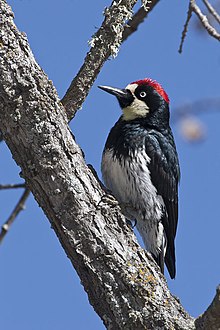
Acorn Woodpeckers came back two days ago and this time there were two! No. I don't believe the pair to be Hairy or Red Breasted Sapsuckers. The Acorn Woodpecker's markings *have perplexed me b/c they are unusually marked to the rear of their heads. I have decided upon Acorn due to its primary back color of black and top red head spot that does not cover its entire head. They have black backs with red on the very top of their heads. The perplexing marking was a small white vertical line dash on the rear of their head combined with the white ring around its beak that does not extend to the rear of his black neck. No other white markings on the back leads me to exclude Downy, Red Breasted Sapsucker and a Hairy.
If my Petersons Guide would identify juveniles....and inter breeds that would be great! Acorn was the best visual match. I have seen Red Breasted Sapsuckers here. I have also seen a juvenile Downy Woodpecker here. Hairy Woodpeckers? No. b/c, they did not have white stripe on the back. IDK strangest pair of Acorn woodpeckers I've tried to id b/c of white dash in the lower part of back of their heads! B/c of that marking I am wondering if they were juvs or if this pair have been cross bred with another type of woodpecker to produce the different white dash mark. Variations in plumage - I'd love a guide with juv photos.
There is an oak stand less than a mile from where I live and a larger more established well known oak stand within 2 miles. I have found old stashed acorns in the soil at the tree line and fenceline and under evergreens. Squirrels? Do you think Acorn Woodpeckers steal from squirrels and vice versa?http://www.blogger.com/img/blank.gif
"Field studies have shown that breeding groups range from monogamous pairs to breeding collectives of seven males and three females, plus up to 10 nonbreeding helpers. Young have been found with multiple paternity.[1]"
There are Red-naped or Red-breasted Sapsuckers heard in the area, but I have not seen them. These two Acorn woodpeckers were seen at 15 to 25 feet distance, pecking in evergreen about 15 to 18 feet up the tree. Evidently, there are only a dozen sightings in Western Washington of Acorn Woodpeckers.
I'll have to listen for them in the future.
Friday, May 27, 2011
Oh pitiful me! (Pityopus californica)

Even rarer plants:
Because I did not know what a Pine Foot or Pityopus californica was... it has surely died.
Now, I fear that the rare plant police will come and take me away!
This strange looking plant was growing near a Glad that I was babying in my plant nursery near an old stump. In fact, I thought that it was some strange fungus. When I first noticed it, I said, "Slimey thing. Ew!" It was so much uglier than this picture. Its roots were rather shallow, pointy and short. It's base flat and white. It was so near the Glad that it was dug up along with the bulb. I am certain that it is now dead. Well, live and learn. I should take better care to identify these types of things in the future.
Yardbirds in the Rain
Spotted in between the rain and then sun.... and then rain.... in my backyard.
Acorn woodpecker stopping briefly among the evergreens
Bullocks Oreole stopping in at the rose bramble
Oregon Junco ground feeding
and a regular Rufous hummingbird at the feeder.
I found a partial blue eggshell. It may have been at least 1" in length when in tact with black spots.
The spots looked like much dirt or the spots that a fly leaves when it poops.
(sorry for a lack of sophisticated fly poop terminology here.)
Acorn woodpecker stopping briefly among the evergreens
Bullocks Oreole stopping in at the rose bramble
Oregon Junco ground feeding
and a regular Rufous hummingbird at the feeder.
I found a partial blue eggshell. It may have been at least 1" in length when in tact with black spots.
The spots looked like much dirt or the spots that a fly leaves when it poops.
(sorry for a lack of sophisticated fly poop terminology here.)
Wednesday, May 25, 2011
Rare Plants in Thurston County


Washington Department of Natural Resources Natural Heritage Program Thurston County Rare Plants
Everyone enjoyed last weeks sunny weather outdoors. Mowing, raking, planting and weeding our backyards and gardens we should keep in mind the differences between weeds and rare plants. Sometimes it pays to look twice before you pull up what you think is a weed. I have found that there are a few plants in my yard that were listed as rare plants according to the Washington Dept. of Natural Resources Natural Heritage Program. One plant was so small, you would barely notice it, except most of us consider moss as a problem in our yards.
Moss is something we must put up with here in the Pacific Northwest, but bogg club moss is listed as a rare plant. It is really small and if you are not looking for it --- you will miss it! Its formal name, Lycopodiella inundata.
Here is my list of noxious weeds in Thurston County. It is from 2009-2010 and may need to be updated. It's my cheat sheet to weed identification.
Noxious Weeds in Thurston County (Link )
Friday, May 6, 2011
Hawks Oaks Pigeons and Doves
The Washington P. ramorum-positive soil confirmation in December 2010 (reported on in Dec. COMTF newsletter) in a Gig Harbor, Pierce County landscape (adjacent to a previously positive repeat nursery) has been identified as the NA2 lineage. This is the first time this strain has been found outside of a nursery in soil. The confirmed site is along a drainage that had been found positive with infected salal plants in the summer of 2009.-- COMTF May 2011 The May 2011 newsletter from the California Oak Mortality Task Force http://www.suddenoakdeath.org
Near the large oak grove on Canal Rd. SE in Yelm - blue back, white
breast, brown neck collar or ring, long tail.
Appeared to be the size of a Scrub jay, or Stellar jay but its neck
ring was brown. Can Western Scrub Jays have brown neck rings?
Also spotted a hawk circling on the opposite side of the oak grove
further down the road chasing the
smaller birds out of the treeline to land in the evergreens.
The pigeons are back at the silo on Ordway/Wilkenson. There was a
pure white dove or pigeon flying over the canal last week.
Near the large oak grove on Canal Rd. SE in Yelm - blue back, white
breast, brown neck collar or ring, long tail.
Appeared to be the size of a Scrub jay, or Stellar jay but its neck
ring was brown. Can Western Scrub Jays have brown neck rings?
Also spotted a hawk circling on the opposite side of the oak grove
further down the road chasing the
smaller birds out of the treeline to land in the evergreens.
The pigeons are back at the silo on Ordway/Wilkenson. There was a
pure white dove or pigeon flying over the canal last week.
Saturday, April 16, 2011
Birding
Two ducks at Yelm Creek were sitting at the edge of the field where an Eagle and a two pheasant were potted recently. I enjoyed watching a hawk hunt and fly through Mountain Shadow subdivision near an area where the swallows have returned on the canal at Wilkenson Rd. outside of Yelm. I have not seen the pidgeons since last summer near the silo. At the pond I counted 5 ducks and 5 red winged black birds. A couple of rufous hummingbirds are enjoying the freshly filled feeders at my home. I noticed that after eating, one hummer will bulge its neck and turn its head side to side just before another hummer frequents the feeder. They never feed at the same time, but will take turns.
Subscribe to:
Posts (Atom)

 | |||||||||||||||||||||||||
|
 |
|
| ||||||||||||||||||||||
| |||||||||||||||||||||||||
| |||||||||||||||||||||||||


